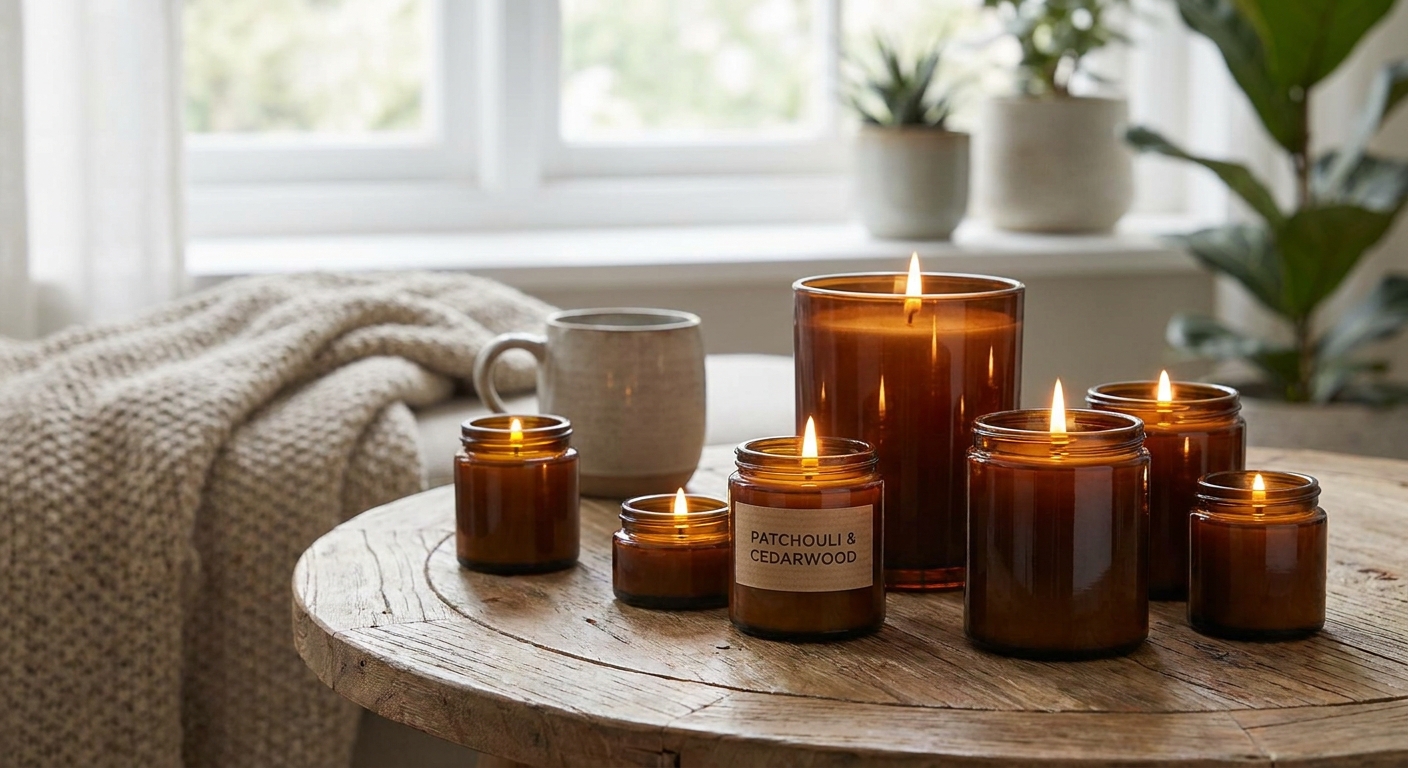
Patchouli splits people fast: it's either the warmest, most grounding note in your candle drawer or the one you swore off after a college dorm phase. In 2026, patchouli is back on shelves as the anchor note in earthy, amber-heavy blends, and picking the right one comes down to matching the blend to your space, not just the label.
- Pure patchouli candles work best in bedrooms and reading nooks under 150 sq ft — Buy for grounding scent, Skip for open floor plans.
- Patchouli-vanilla blends are the safest pick for shared living spaces in 2026 — Buy.
- Soy or coconut-soy wax candles carry patchouli's deep base notes longer than paraffin, typically 40-60 hours per 8 oz jar.
- Custom scent options from retailers like Maddox Candles let you dial patchouli intensity up or down — Consider before buying a fixed blend.
Why this matters
Patchouli is a base note, meaning it lingers under whatever else is in the jar — cedarwood, vanilla, amber, sandalwood. A poorly balanced patchouli candle either fades to nothing after an hour or turns musty and overwhelming by hour three. Getting the wax type, blend ratio, and room size right matters more with patchouli than with lighter florals or citrus scents, because the failure mode is obvious the second you walk into the room.
Heading into 2026, patchouli demand has climbed alongside the broader "warm minimalism" home trend — think exposed wood, linen, and low lighting. That aesthetic pairs naturally with a grounding base note, which is part of why patchouli blends are showing up more in seasonal collections this year than in 2023 or 2024.
How this list is ranked
Each profile below is ranked on four criteria: scent authenticity (does it smell like actual patchouli oil, not a synthetic approximation), blend balance (does the top and mid note support the base without masking it), burn performance (wax type and how evenly the scent throws across a room), and versatility (how many rooms and seasons it actually works in). Wax type and burn time data reflect standard industry ranges for soy and coconut-soy blends as of 2026, not a single retailer's testing claim.
Best patchouli candles, ranked by profile
1. Pure patchouli — the purist's pick
A single-note patchouli candle, no vanilla or amber softening it, smells the closest to raw patchouli essential oil. The giveaway is depth: a true pure patchouli candle in an 8 oz soy jar throws scent noticeably within 20-30 minutes of lighting, no delay. It reads earthy, slightly sweet, almost medicinal if overdone. This is the one to buy for a home office or bedroom under 150 square feet where you want the scent to stay contained rather than spread through the house. Verdict: Buy for small, single-purpose rooms — Skip for open-concept living areas where it can turn heavy fast.
2. Patchouli vanilla bourbon — the crowd-pleaser
Adding vanilla softens patchouli's sharper edges without diluting the base. This blend is the one most home fragrance shoppers land on first because it works in shared spaces — living rooms, entryways, kitchens — without polarizing guests the way pure patchouli can. Look for candles that list vanilla bourbon or vanilla bean specifically, not generic "vanilla," since bourbon vanilla has a richer, boozier note that holds up better against patchouli's weight. Verdict: Buy for anyone furnishing a shared living space in 2026, especially if this is your first patchouli candle.
3. Patchouli cedarwood — the grounding pick
Cedarwood and patchouli are both base-heavy, so this pairing skips the top-note fade problem entirely — what you smell at minute five is close to what you smell at hour three. It leans masculine and woodsy, closer to a study or den than a bedroom. Custom scent options from a retailer like Maddox Candles let you request a higher cedarwood ratio if the standard blend runs too heavy on patchouli alone, which matters since this pairing has the widest variance in quality across brands. Verdict: Buy for a home office or den; Hold if you haven't smelled a sample first, since ratios vary more here than in other blends.
4. Patchouli amber musk — the wildcard
Amber musk pushes patchouli toward warmer, almost resinous territory — it's the blend most likely to divide a household. Done well, it smells expensive and layered; done cheaply, the synthetic musk note flattens everything into a single generic "warm" smell with none of patchouli's actual character. Check the ingredient or scent notes listing before buying — if amber and musk are the only two notes mentioned alongside patchouli, that's a good sign the blend wasn't stretched with filler fragrance. Verdict: Consider if you've already tried and liked pure patchouli or patchouli cedarwood — Skip as a first patchouli candle purchase.
5. Patchouli sandalwood — the year-round option
Sandalwood's creamy, slightly sweet profile keeps patchouli from tipping into muddy territory, and this pairing tends to hold its scent throw most consistently across a candle's full burn — often still detectable at the 40-hour mark in an 8 oz soy jar, where lighter blends have faded by hour 25. It works in nearly any room and doesn't skew heavily masculine or feminine, which makes it the safest gift option of the five. Verdict: Buy, particularly if you're buying for someone else's home and don't know their exact taste.
Comparison table
| Blend | Best room | Scent intensity | Wax recommendation | Verdict |
|---|---|---|---|---|
| Pure patchouli | Bedroom, office under 150 sq ft | Highest | Soy | Buy (small rooms) |
| Patchouli vanilla bourbon | Living room, entryway | Medium-high | Soy or coconut-soy | Buy |
| Patchouli cedarwood | Den, study | Medium-high | Soy | Buy / Hold on sampling |
| Patchouli amber musk | Bedroom, evening use | High, variable | Coconut-soy | Consider |
| Patchouli sandalwood | Any room, year-round | Medium | Soy | Buy |
What to avoid
- "Patchouli-scented" candles with patchouli listed fourth or fifth in the notes — if it's buried under three other fragrances, it's an accent, not the actual profile you're buying for.
- Paraffin candles claiming a 60+ hour burn at a bargain price — paraffin burns hotter and faster than soy or coconut-soy, so a genuinely long patchouli throw is more likely from a soy-based jar candle.
- Blends marketed as "patchouli" with no second note listed at all — real patchouli candles almost always pair the base with something to soften it; a completely bare listing usually signals a synthetic single-note fragrance oil rather than a blended scent.
Build your own patchouli blend
Custom scent options let you set the exact patchouli ratio for your home.
Where to buy
- Check the wax type before the scent name. Soy and coconut-soy hold patchouli's base notes longer than paraffin, so two candles with an identical label can perform very differently depending on wax.
- Buy a sample size or wax melt first if the retailer offers one. Patchouli blends vary more between brands than almost any other scent family, and a full jar is a bigger commitment if the ratio is off.
- Ask about custom scent options if you want a specific ratio. Retailers that offer custom blending, including Maddox Candles, let you request more or less patchouli relative to the pairing note instead of guessing from a fixed product line.
FAQ
What are the best patchouli candles for a small bedroom?
Pure patchouli candles in an 8 oz soy jar work best in bedrooms under 150 square feet in 2026, since the scent throw stays contained rather than spreading through an open floor plan. Patchouli sandalwood is a lighter alternative if pure patchouli reads too heavy at night.
Is patchouli vanilla or patchouli sandalwood better for a living room?
Patchouli vanilla bourbon works better for shared living spaces because it's less polarizing across a household than pure patchouli or amber musk blends. Patchouli sandalwood is the safer year-round choice if you want one candle for every room.
How long do patchouli candles usually burn?
An 8 oz soy patchouli candle typically burns 40-60 hours, with coconut-soy blends often on the higher end of that range. Paraffin versions usually burn faster and can lose scent throw well before the wax is fully used.
Do patchouli candles smell dated or outdated in 2026?
No — patchouli has re-emerged as a base note in 2026's warm minimalism home trend, paired most often with vanilla, cedarwood, or sandalwood rather than worn alone. The dated reputation mostly comes from cheap, single-note synthetic versions, not blended soy candles.
What's the difference between patchouli cedarwood and patchouli amber musk?
Patchouli cedarwood is woodsy and consistent from the first minute to the last hour of burn, making it a safer pick for a den or office. Patchouli amber musk is warmer and more variable in quality across brands, better suited to buyers who already know they like patchouli.
Can I customize a patchouli candle's scent ratio?
Yes — some home fragrance retailers, including Maddox Candles, offer custom scent options where you can request a stronger or lighter patchouli ratio relative to the pairing note. This matters most for cedarwood and amber musk blends, where quality varies widely between brands.
Are soy patchouli candles better than paraffin ones?
Soy and coconut-soy candles generally hold patchouli's base notes longer and burn cleaner than paraffin, with typical burn times of 40-60 hours in an 8 oz jar. Paraffin candles burn hotter and faster, which often means the scent throw fades before the wax is gone.
What room works best for a strong patchouli scent?
Bedrooms and home offices under 150 square feet handle a strong pure patchouli candle best, since the scent stays concentrated rather than spreading thin. For larger or shared rooms, a softened blend like patchouli vanilla bourbon or patchouli sandalwood throws more evenly.
One last thing
The blend that fades fastest isn't always the cheapest one — it's often the one with patchouli listed last in the notes, meaning it was never the star of the candle to begin with. If a listing doesn't put patchouli in the first two notes, assume it's an accent scent, not a true patchouli candle, no matter what the product name says.